Manang Motorbike Adventure Ride
Manang Motorbike Adventure Ride 10 Days Trip overview
Ten days of riding take you from Kathmandu into the Himalayas of Manang. The route follows paved roads along the Marsyangdi River before turning into rugged off-road trails past Besisahar, passing forests, villages, and gravel switchbacks toward Chame and higher valleys. At 3,519 m in Manang, enjoy an acclimatization day with visits to Braga Monastery and Gangapurna Lake, with an optional challenging ride to Ice Lake for panoramic views. The return descends through the Marsyangdi Valley, stopping at Taal and Bandipur before riding back to Kathmandu, completing an unforgettable Himalayan motorcycle journey.
Manang Motorbike Adventure Ride 10 Days Highlights
The road out of Kathmandu is paved for the first stretch, tracing the Marsyangdi River west through Mugling and Dumre before the real character of this route shows up. That's the pattern of the whole trip: comfort first, then dirt. By the time you roll into Besisahar, you've covered around 175km of highway and the last easy day is behind you.
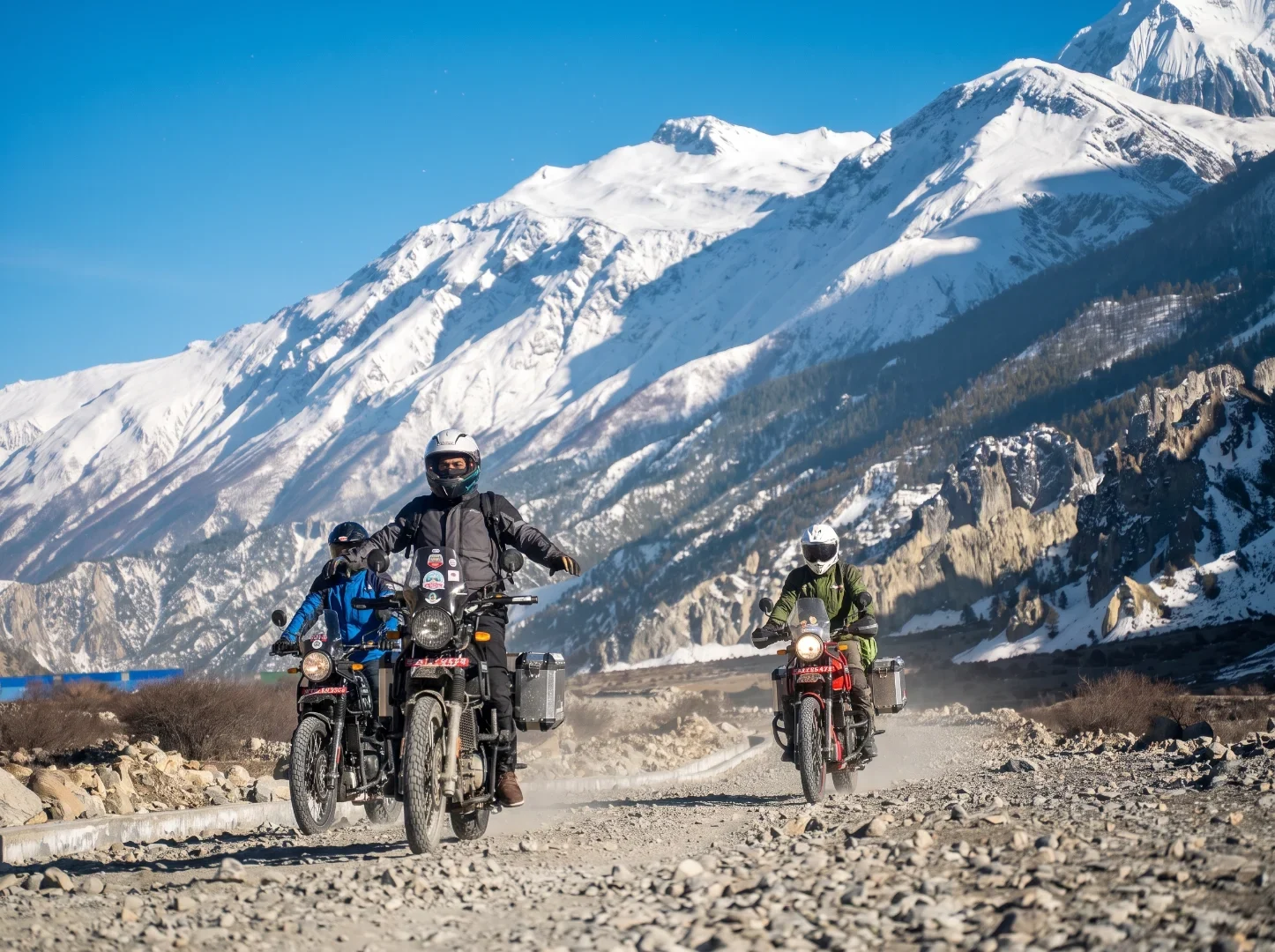
Past Besisahar, the tarmac runs out and the tour turns into what it actually is: an off-road ride along the Annapurna Circuit trail corridor, on a motorbike instead of on foot. The climb to Chame is narrow, rutted in places, and cut through pine forest and river gorge with suspension bridges strung across the Marsyangdi at intervals. Villages like Jagat, Tal, and Dharapani break up the ride, and this is the stretch where riders either fall in love with the terrain or start questioning their tire choice.
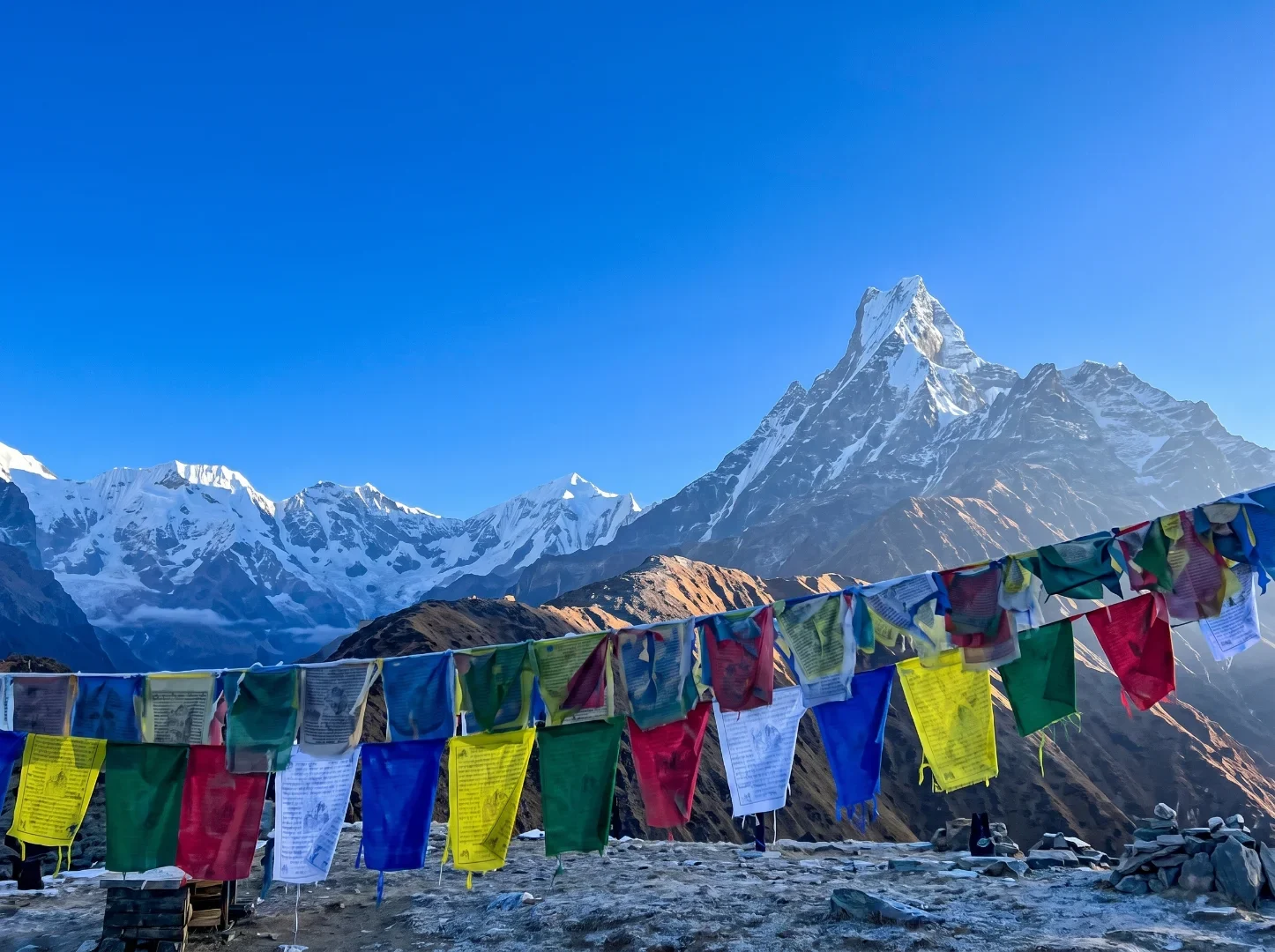
Chame to Manang gains real altitude, climbing to 3,519m through Bhratang, Pisang, and Humde, with the Annapurna massif filling more of the sky the higher you get. Manang itself sits in a high desert valley, dry and windswept in a way that feels almost un-Nepali after the forest lower down, and it's worth the built-in rest day: Braga Monastery is one of the oldest in the region, and Gangapurna Lake sits below its namesake glacier close enough to walk to from town.
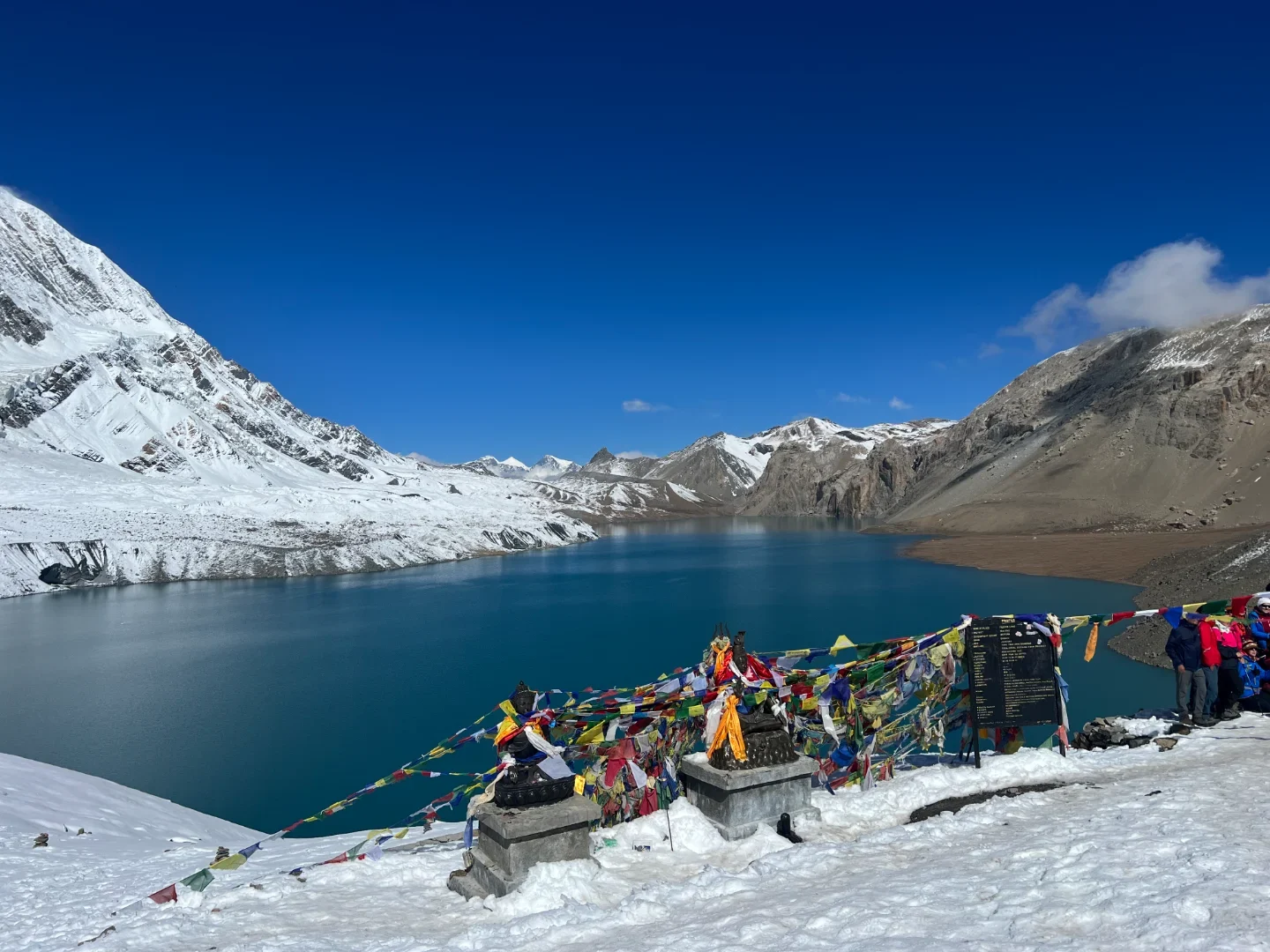
For riders who want to push further, there's an optional day toward Khangsar or Ice Lake, both of which climb well above 4,000m and are weather-dependent. Nobody should count on that day happening; the Manang valley makes its own rules about which mornings are rideable.
The return drops back down through Taal village before swinging to Bandipur, a Newari hilltop town that's a deliberate change of register after several days of dust and altitude, cobblestone streets and mountain views instead of gravel switchbacks. From there it's a straightforward drive back to Kathmandu to close the loop.
This isn't a beginner ride. The middle days involve loose surfaces, exposed edges, and altitude gain that can catch riders off guard even with the acclimatization day built in. Anyone booking this should already be comfortable on a bike off pavement, not just comfortable on a bike.
Required Permits & Regulations
Manang Motorbike Adventure Ride 10 Days Detailed Itinerary
Arrival in Kathmandu(1,400m / 4,593ft)
Ride from Kathmandu to Besisahar(760m / 2,493ft)
Ride from Besisahar to Chame(2,710m / 8,890ft)
Chame to Manang Village(3,519m / 11,545ft)
Acclimatization in Manang village
Manang to Khangsar(3,734m /12,251ft) and the Ice Lake(4,600m / 15,092ft)
Ride from Manang to Taal Village(1,700m / 5,577ft)
Ride from Taal Village to Bandipur(1,030m / 3,379ft)
Return to Kathmandu(1,400m / 4,593ft)
Final Departure from Kathmandu
Want to customize this itinerary?
Adjust dates, group size, budget, accommodation and more — our experts will craft a trip perfectly tailored for you.
Trip Inclusions & Exclusions
Inclusions
- Two nights accommodation with breakfast (room with attached bathroom) in Kathmandu
- Standard full-board meals (8 lunches, 7 dinners, and 8 breakfasts), with one main course per meal during the Trip
- Government licensed Destination Guru’s experienced trek leader (guide), an assistant trekking guide for 9 or more trekkers.
- Motorbike (Royal Enfield or KTM Adventure Motorbike) Rental Cost for 10 Days, Fuel, and Maintenance
- Annapurna Conservation Area Permit (ACAP) fee and Trekkers Information Management System (TIMS) card fee
- All government, local taxes, and official expenses
- Arranging rescue operations in case of complicated health conditions (funded by travel insurance)
- Medical kits, including an oximeter to monitor blood oxygen saturation levels in high altitudes
- Support Vehicle-Jeep for 10+ people Group
- Free excess luggage storage at the Destination Guru’s store for the duration of the trip
- Airport Pickup and drop off by Private vehicle on Arrival and Departure
Exclusions
- Nepal entry visa fee (easy to obtain the visa on arrival at Tribhuvan International Airport – Kathmandu). $30 USD for 15-day, $50 USD for 30 Days, and $125 USD for 90 Days visa.
- International airfare.
- Your personal expenses.
- Personal travel and medical insurance.
Gallery of Manang Motorbike Adventure Ride
Manang Motorbike Adventure Ride 10 Days Trip info
Driving License Requirements
Nepal does not recognize a foreign license on its own, motorcycle or otherwise. Every rider needs their valid home country motorcycle license plus an International Driving Permit (IDP) endorsed for motorcycles, and the two have to be carried together; neither one works alone at a checkpoint. Get the IDP before you fly, since it can't be issued once you're in Nepal. Traffic here runs on the left, and police checkpoints along mountain routes do check papers, so keep your passport, visa, license, and IDP on you for the whole ride, not just packed somewhere in your bag.
Why Choose a Guided Ride in Nepal
You can technically rent a bike and figure out the Manang route on your own, but most riders who try it once don't try it twice without a guide. The road past Besisahar has no signage to speak of, weather closes sections of the high route with little warning, and a breakdown or accident in a village with no mechanic is a different problem entirely from a breakdown in Kathmandu. A guided trip with Destination Guru means someone in your group knows the terrain, carries the tools and spares, and can talk to local authorities and hospitals in Nepali if something goes wrong. You're still the one riding the bike, but you're not the one solving every problem that shows up along the way.
Best Season to Ride
Autumn (late September through November) and spring (March through May) are the two windows worth planning around. Autumn tends to bring the clearest mountain views after the monsoon washes the dust out of the air, while spring adds rhododendron forests in bloom lower down the route. Winter is rideable but Manang gets seriously cold and the high lakes are often snowed in. Monsoon season, roughly June to September, turns the gravel sections into a different kind of ride altogether, and not in a good way.
Fitness and Riding Experience Needed
This isn't a route to learn off-road riding on. You should already be comfortable handling a bike on loose gravel, river crossings, and exposed switchbacks before you sign up, because the middle days won't give you much choice about the terrain. General fitness matters too, since the altitude days ask more of your body than the riding itself does. If your off-road experience is limited to smooth trails or you've never ridden above 3,000m, it's worth an honest conversation before booking rather than finding out on Day 4.
Permits Required
Two permits cover this route: the Annapurna Conservation Area Project (ACAP) permit and a TIMS (Trekkers' Information Management System) card, both standard for anyone entering this part of the Annapurna region regardless of whether they're walking or riding. Destination Guru arranges these ahead of time with passport-sized photos and passport copies, so there's paperwork to send over before departure but nothing you need to queue for yourself once you're on the road.
Accommodation Along the Route
Expect teahouses and local lodges for most nights, simple rooms that get more basic the higher you climb. Besisahar and Bandipur have more comfortable options, closer to a standard guesthouse, while Chame and Manang are proper mountain teahouses with shared bathrooms in most cases and hot showers that may cost extra. Nobody's booking this trip for the beds; you're booking it for what's outside the window in the morning.
Meals on the Trip
Meals are mostly included and mostly local: dal bhat, noodle soups, momos, and simple Western options like eggs and toast at the higher teahouses. Dal bhat in particular is worth leaning into on this route, since it's the one meal designed to actually fuel a long day of riding at altitude, and most teahouses will refill your plate without asking twice.
Bike and Gear Provided
Bikes for this route are typically 150cc to 400cc off-road capable machines, with the Royal Enfield Himalayan a common choice given how much of the trip is spent on gravel and river crossings. Helmets are mandatory for rider and any passenger by Nepali law, and Destination Guru provides a Helmet, basic tools, and a support vehicle or mechanic who can catch you if the bike can't finish a day on its own.
Altitude and Acclimatization
Manang sits at 3,519m and the optional lake days push well above 4,000m, high enough that altitude sickness is a real possibility even for fit riders. The built-in rest day at Manang exists specifically to let your body adjust before you go any higher, and it's not a day to skip just because you're feeling fine that morning. Headache, nausea, and disrupted sleep are the early warning signs; if any of them show up, the right move is to stop climbing, not push through.
Frequently asked questions and our answers for Manang Motorbike Adventure Ride
Guest Reviews
No reviews yet for this trek.
Group Discounts
Best Value**Discounts are based on your group size. We do not mix groups.