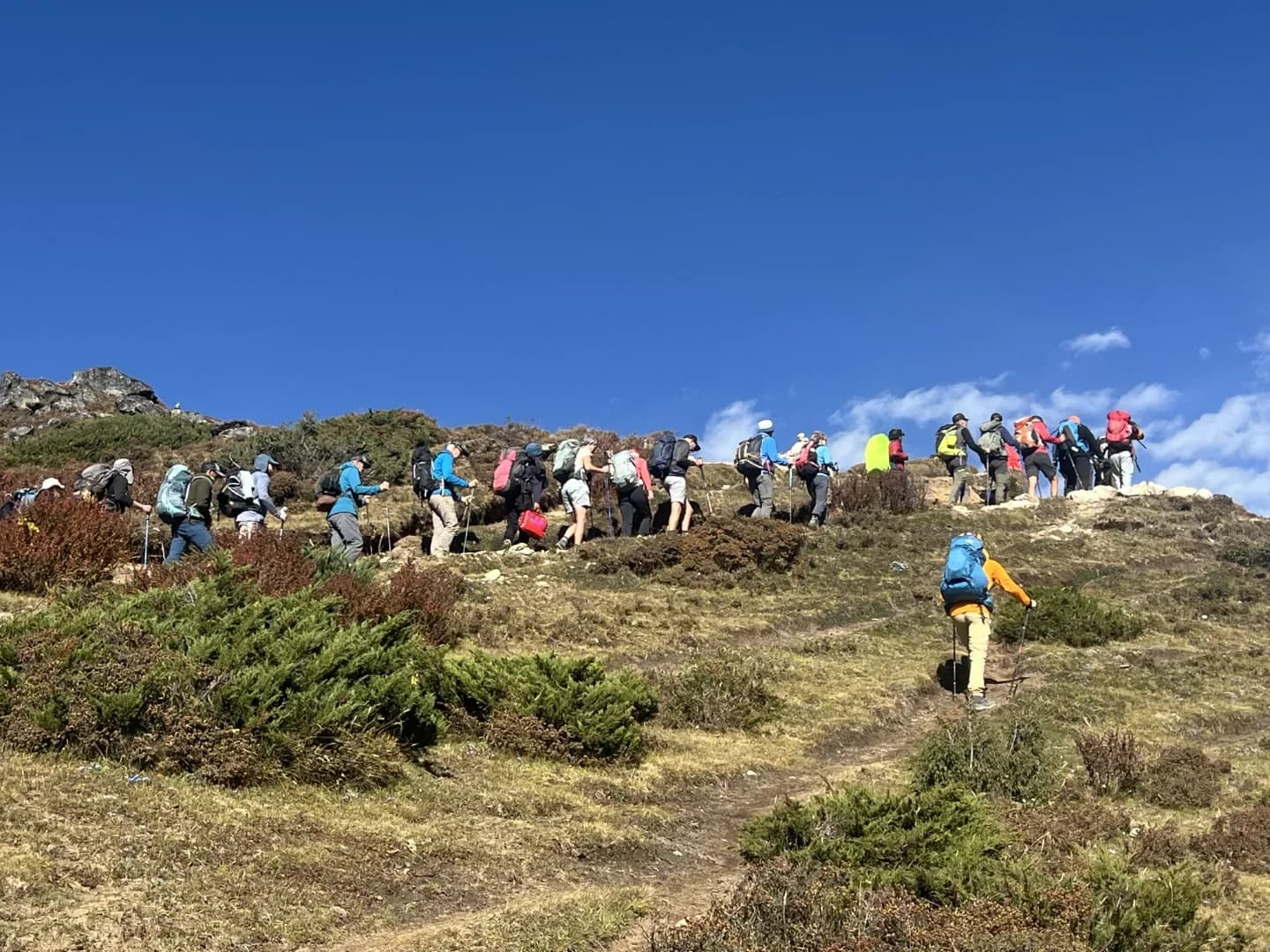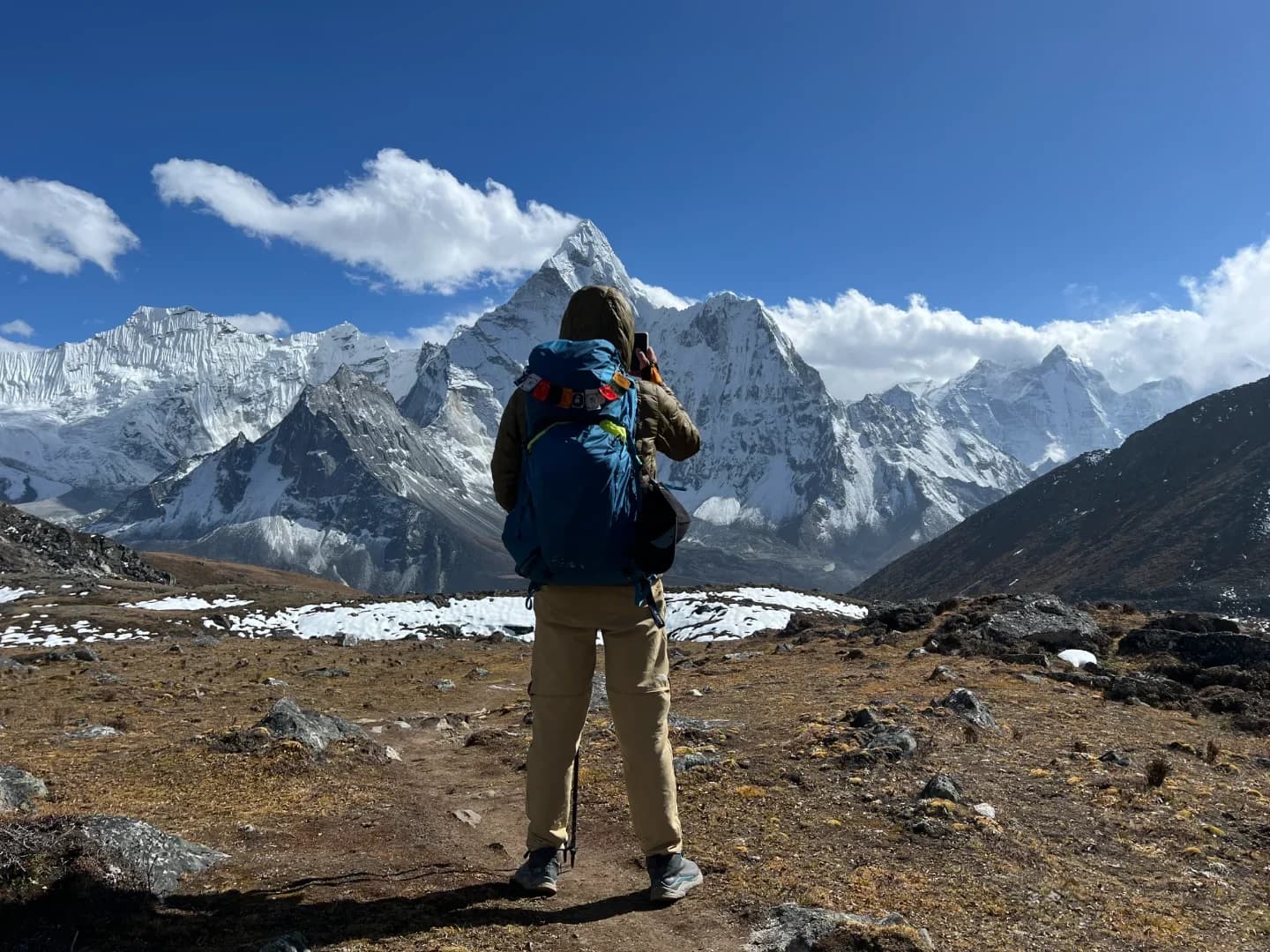
"The Everest Three Passes Trek is one of the most challenging and rewarding trekking adventures in Nepal. Designed for experienced trekkers and true mountain lovers, this circuit goes far beyond the classic Everest Base Camp route. It crosses three high Himalayan passes above 5,000 meters and offers unmatched views of Everest, Lhotse, Makalu, Cho Oyu, and countless other peaks. This trek is about endurance, isolation, raw landscapes, and deep immersion into the Khumbu region."
If you're looking for the most complete Everest Region trekking experience possible, the Three Passes Trek delivers it. This isn't the standard Everest Base Camp route that thousands walk every season. This is the full Khumbu- raw, remote, and deeply rewarding.
The trail crosses three high mountain passes, loops through ancient Sherpa villages and glacial valleys, passes the iconic Gokyo Lakes, and still takes you all the way to Everest Base Camp and Kala Patthar. Few treks anywhere in the world pack this much into a single journey.
What Is the Everest Three Passes Trek?
The Everest Three Passes Trek is a high-altitude circuit through the upper Khumbu region of Nepal. It crosses three major passes Kongma La (5,535m), Cho La (5,420m), and Renjo La (5,360m) linking valleys, ridgelines, and landscapes that most Everest trekkers never see.
The highest point on the route is Kala Patthar at 5,545 meters, widely regarded as the finest viewpoint of Mount Everest accessible without technical climbing. All three passes sit above 5,300 meters, which means acclimatization, physical preparation, and smart planning aren't optional, they're everything.
The Three Passes – What to Expect at Each One
Kongma La Pass – 5,535m
Kongma La is typically the first pass crossed on the circuit, and for many trekkers, the most demanding. The trail between Chhukung and Lobuche is long, remote, and sees far less foot traffic than the main EBC corridor. You'll cross rocky moraines and glacial terrain with no real shelter if the weather turns.
The reward is worth every step. From the top, the views stretch across Ama Dablam, Lhotse, Makalu, and the vast Khumbu Glacier spreading out below you. a landscape so big it takes a moment to fully process.
Cho La Pass – 5,420m
Cho La is the connector- the pass that links the Everest Base Camp side of the valley with the beautiful, quieter world of Gokyo. The ascent is steep and the upper section is frequently icy, particularly in the early morning. Microspikes are a sensible addition to your kit for this one.
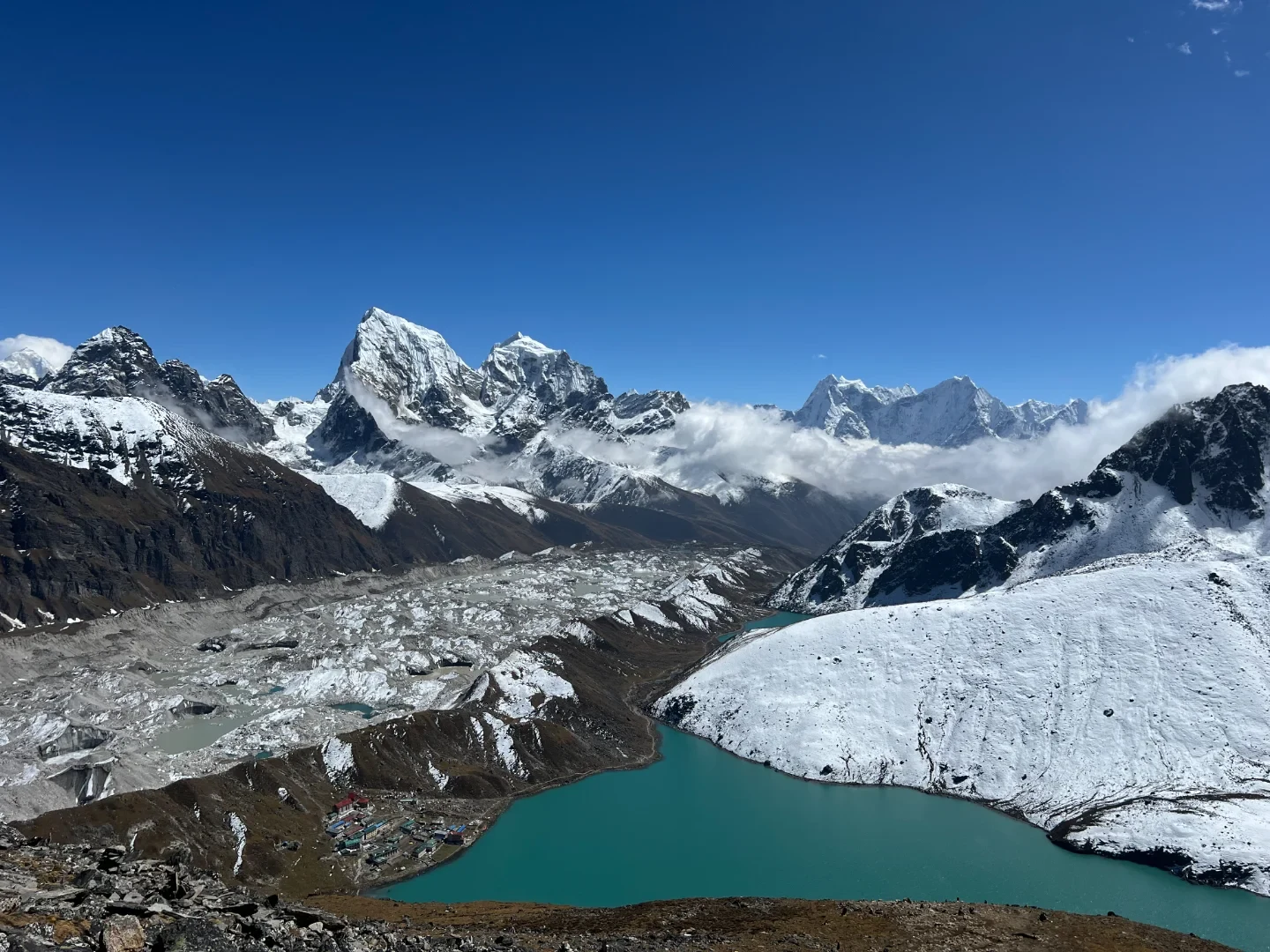
Once you're over the top, the descent into Gokyo Valley is one of those trekking moments you'll describe to people for years. Glacier views, open ridgelines, and the first glimpse of the turquoise lakes ahead.
Renjo La Pass – 5,360m
Most trekkers agree: Renjo La is the most scenic of the three. The panorama from the top is extraordinary - Everest, Lhotse, Makalu, and Cho Oyu all visible at once, with the brilliant turquoise surface of the Gokyo Lakes shimmering far below. The descent leads eventually toward Thame and back to Namche Bazaar, a satisfying close to the high-altitude section of the route.
Best Time to Trek the Everest Three Passes
Timing matters a great deal on this trek. With three passes above 5,300 meters, poor conditions can make crossing genuinely dangerous.
Spring (March to May) is excellent -stable weather, increasingly warm temperatures, and rhododendrons blooming at the lower elevations. The mountains are clear and the trails are in good shape after winter.
Autumn (September to November) is the most popular season and for good reason. Skies are consistently clear, visibility on the passes is superb, and the dry trails make for confident walking. October in particular is a golden month in the Khumbu.
Winter trekking is possible for experienced trekkers but comes with serious challenges, extreme cold, heavy snow on the passes, and significantly reduced teahouse services. Monsoon season (June to August) is not recommended- poor visibility, unstable conditions on the passes, and a much higher chance of the journey not going to plan.
How Difficult Is the Everest Three Passes Trek?
This trek is classified as very challenging, and that classification is honest. You'll be walking six to eight hours most days, sometimes longer on pass-crossing days. at altitudes where your body is working harder than it does at sea level.
To complete this trek comfortably and safely, you should come with:
Previous high-altitude trekking experience (Everest Base Camp or similar)
Strong cardiovascular fitness built up over months, not weeks
Mental resilience - the ability to keep going when the altitude makes everything feel harder than it should
Proper acclimatization days built into your itinerary are non-negotiable. Rushing the altitude is the most common reason treks get cut short in the Khumbu.
Accommodation and Food on the Trail
The entire route is serviced by teahouses and small family run lodges that provide a bed, a meal, and a warm fire at the end of the day. Rooms are simple and functional: a bed, blankets, and shared bathroom facilities. As you gain altitude, the rooms get simpler and the prices go up.
Food follows the classic trekking menu - dal bhat, noodles, soups, pasta, potatoes, and porridge. all of it good, filling, and exactly what your body needs at altitude. Dal bhat is the local staple and genuinely the best fuel for long trekking days. Everything costs more the higher you go, as all supplies are carried in by porters or flown to Lukla.
Permits You'll Need
Two permits are required to trek in the Everest Region:
Sagarmatha National Park Permit
Khumbu Pasang Lhamu Rural Municipality Permit
Both are mandatory and checked at multiple points along the trail. Your guide or trekking agency can arrange these in Kathmandu or Lukla before you start.
Is the Everest Three Passes Trek Worth It?
Without question. The Three Passes Trek covers ground that most visitors to the Everest Region never see. hidden valleys, remote ridgelines, glacier crossings, and viewpoints that feel earned rather than handed to you. It's the kind of trek that changes how you think about what you're capable of.
If you have the fitness, the time, and the high-altitude experience to attempt it, this is one of the finest long-distance mountain treks in the world.
Planning the Everest Three Passes Trek? Contact our team for a customized itinerary, permit support, and expert guidance from experienced local guides.